Published , Updated
9 min readEverything You Need to Know About Ordering Patches for Uniforms
By Rizwan Ali, Chief Operating Officer, Swag Print
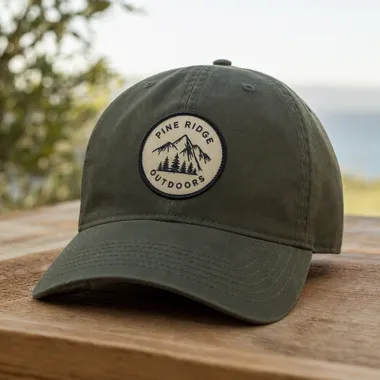
You have forty shirts, six jackets, and a stack of caps going out to a new crew next week. Do you embroider every garment directly, or do you order patches and apply them? For most uniform programs, patches win on flexibility, cost control, and the ability to swap a logo or a name without replacing the garment.
Patches for uniforms also do real work beyond decoration. They identify roles and responsibilities inside an organization, signal rank or department, and give a team the kind of consistent, professional look that customers notice at a glance.
The catch is that there are a lot of decisions in front of you: patch style, material, size, shape, border, backing, and thread. Get one of them wrong and you end up with a patch that peels off in the wash or a logo that turns into a blur at two inches wide.
This guide walks through every one of those choices, then covers the practical side of creating custom uniform patches: artwork files, proofs, minimums, and timelines. By the end, you'll know exactly what to order and what to check before you approve production.
Types of Uniform Patches and What Each One Does Best
We make patches for uniforms in eight styles, and each one behaves differently on a garment. Here's how to read them.
Embroidered Patches
Embroidered patches use thread stitched onto a fabric base, usually twill or felt. They give you that detailed, textured look people associate with service uniforms, and they're one of the longest-lasting options, especially when sewn on. If your logo has bold shapes and readable type, embroidery is the default choice.
Embroidery itself comes in variations too, including 3D puff, satin stitch, and chenille, so you can add dimension to a crest or a monogram without changing the patch format.
Woven Patches
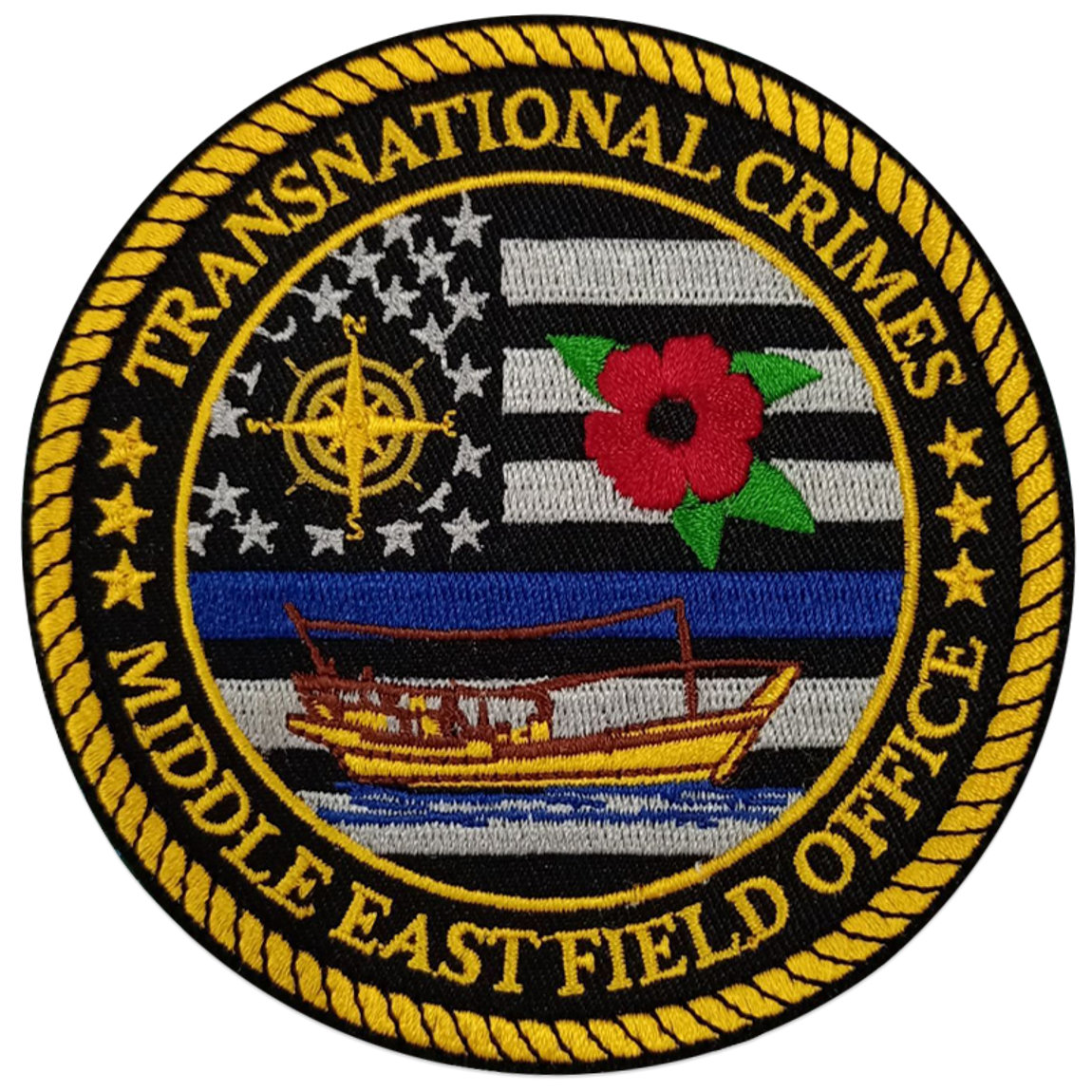
Woven patches are made from finer threads woven into the fabric rather than stitched on top. That means a flatter, smoother face and noticeably more detail in small areas. When your logo includes thin lines, small text, or a tight icon, woven usually reproduces it more cleanly than embroidery.
Full-Color Printed Patches
Printed patches handle artwork that thread can't: gradients, photographic elements, illustration, and unlimited color counts. If your brand mark was designed on a screen and never simplified for stitching, printing is the honest way to reproduce it.
PVC and 3D Silicone Patches
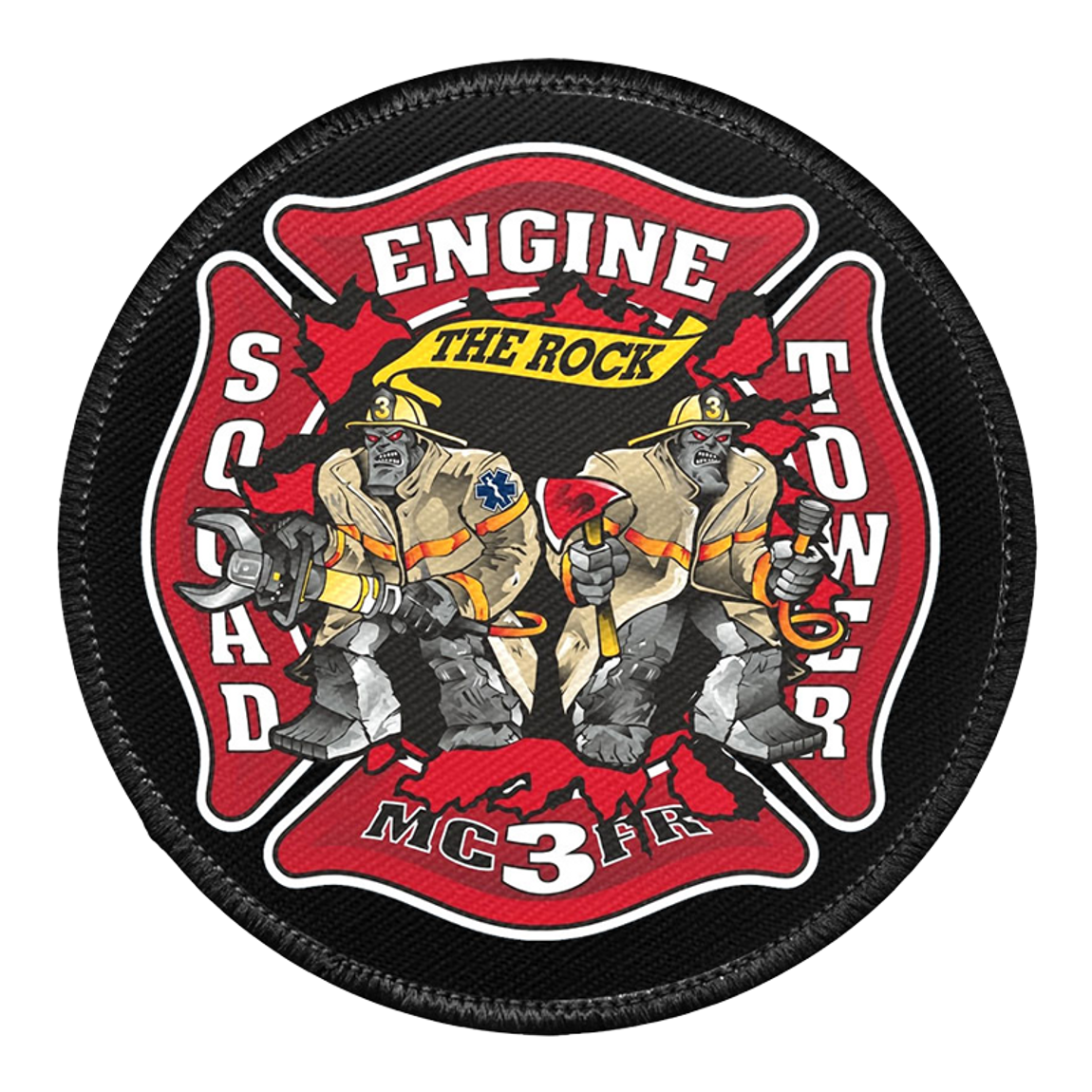
PVC patches are molded from polyvinyl chloride instead of fabric, which makes them durable and weather resistant. Along with embroidered patches, they're the style that typically lasts longest, especially when sewn on. For outdoor crews, field techs, and anyone whose uniform takes abuse, PVC and 3D silicone are worth a look.
Chenille, Leather, and Heat Transfer
- Chenille patches have a raised, fuzzy yarn texture that reads well at large sizes, which is why they're a staple on varsity jackets, spirit wear, and club uniforms.
- Leather patches bring a premium, understated finish and come in Black, Brown, Dark Brown, Dark Green, Gray, Light Brown, Maroon, Navy Blue, Tan, and White.
- Heat transfer decals sit thinnest against the fabric and work when you want branding without the raised edge of a stitched patch.
Key Insight: Match the patch style to your artwork before you match it to your budget. Fine text and thin lines belong on woven or printed patches; bold, simple marks are where embroidery and PVC shine.
Sizes, Shapes, and Placement
Our patches run from 2 inches to 12 inches in both width and height, in 1-inch increments, so you can order a small chest emblem and a large back panel from the same artwork. Patches can be made in a standard shape or a fully custom shape cut to your design.
Your design and your placement location should drive the size decision together. A left chest or sleeve position limits how much real estate you have, so simplify the artwork rather than shrinking it. Back panels and jacket yokes give you room to keep taglines and secondary text legible.
Headwear follows the same logic. Caps and beanies take patches on the front, back, or side, and the front panel is usually the tightest space in the whole uniform, so that's the one to design for first.
| Spec | What we offer |
|---|---|
| Patch styles | Embroidered, woven, full-color printed, chenille, PVC, leather, heat transfer, 3D silicone |
| Dimensions | 2"–12" wide by 2"–12" high, in 1-inch increments |
| Shapes | Standard shapes or fully custom shapes |
| Borders and edges | Merrowed, hot cut, die cut (laser cut) |
| Backings | Plain, pellon, iron-on, tape, single Velcro, double Velcro, safety pin, key chain |
| Thread colors | Standard color, metallic gold, metallic silver |
| Minimum order | 1 patch |
| Turnaround | Typically 10–14 business days, including manufacturing and delivery |
Pro Tip: Print your artwork at actual size on plain paper and hold it against the garment before you order. It takes two minutes and it catches most sizing mistakes.
Backings and Attachment Methods
Backing is the decision that most often gets revisited after the first wash cycle, so give it real thought. Available backings vary by patch style; some styles offer the full list, while others are limited to plain, Velcro, and key chain.
- Plain and pellon backing: the standard choice for sew-on application, where the patch is stitched directly to the garment.
- Iron-on backing: bonds to the fabric with heat, which is faster to apply across a large batch of shirts.
- Tape and adhesive backing: sticks directly to the garment with no heat or stitching, and offers the least durability of the group.
- Single and double Velcro: hook-and-loop backing that lets you remove and swap patches by role, shift, or assignment.
- Safety pin backing: useful for temporary identification, volunteers, and event staff who aren't in permanent uniform.
On durability, the pattern is consistent. Most patches withstand washing, particularly when sewn on. Iron-on patches generally hold up through multiple washes but may deteriorate over time, and adhesive patches may not survive frequent washing and can peel away. For uniforms that get laundered constantly, sew-on is the safe answer.
Important: If your uniforms go through commercial or industrial laundering, ask your laundry service what their cycle involves before choosing a backing. Heat and chemical exposure vary widely between services.
Borders, Thread Colors, and Upgrades
Edge finishing affects both the look and the lifespan of a patch. You can choose a merrowed border, which wraps the edge in a raised stitched rim and is the classic uniform look; a hot cut (heat cut) edge, which seals the fabric flat; or a die cut or laser cut edge, which follows an irregular custom shape precisely.
Thread options include standard color plus metallic gold and metallic silver, which are common on rank insignia and crests. We also offer special features such as reflective thread, metallic thread, and glow-in-the-dark elements, and PVC patches can be ordered with debossed or embossed detailing.
Reflective thread often comes up for crews working near traffic. For context, OSHA has stated that its standards require highway and road construction work-zone employees to wear high-visibility garments when they work as flaggers and when they're exposed to public vehicular traffic near excavations, and that the General Duty Clause covers other work-zone workers; see OSHA's interpretation letter for the full wording. That's a requirement about the garment itself, not the patch, so treat reflective thread as a visibility enhancement and keep your compliance decisions at the garment level.
One color note worth repeating: color may appear slightly different between browsers and devices. We match your color selections as closely as possible using PMS codes.
How to Choose the Right Patches for Uniforms
Start With Purpose and Audience
A patch that identifies a department has a different job than a patch that promotes a brand. If you need to distinguish roles across a team, plan for a shared base design plus role-specific variants, and consider Velcro so one garment can carry different patches. If the goal is brand visibility, prioritize legibility at a distance over fine detail.
Weigh Budget Against Quantity
Our minimum order is one patch, which means you can buy a single sample, order one per employee, or outfit an entire organization without hitting a quantity wall. Per-unit cost drops as quantity rises, and the bulk price chart on the product page shows how pricing moves with volume for your chosen style and size.
Plan for Design and Durability Together
Decide how long each patch needs to survive. For a uniform worn daily for years, PVC and embroidered patches sewn on are the most durable combination. For a seasonal crew, an event team, or a pilot program, iron-on or pin backing is reasonable and faster to apply.
Then simplify. Drop decorative strokes, increase the weight of small type, and give letters breathing room. A design that looks tight on screen at 100% zoom is not the same thing as a design that reads at three inches on a moving person.
Why Organizations Put Patches on Uniforms
Uniforms are not a small corner of the market. The global workwear and uniforms market was estimated at $67.92 billion in 2025, with North America holding more than 40% of global revenue. Patches are how a large share of those garments get identified and branded.
The branding math is favorable too. According to the Advertising Specialty Institute's 2023 Ad Impressions Study, a logoed cap generates 3,380 impressions over its lifetime, 56% of consumers would keep and wear it for at least a year, and an $8 baseball cap costs less than a quarter of a cent per impression. Logoed outerwear performs even better, at 7,856 lifetime impressions, with 61% of recipients keeping it for at least two years.
- Role clarity: patches identify departments, ranks, certifications, and responsibilities at a glance.
- Flexibility: one blank garment can serve multiple roles when you use Velcro backing and swap patches.
- Lower replacement cost: rebranding or role changes mean new patches, not new uniforms.
- Consistency: every garment carries the same artwork at the same size, regardless of where it was sourced.
- Team identity: schools, clubs, and sports teams lean on crest patches heavily; in 2019–20, 18.8% of U.S. public schools required uniforms, according to the National Center for Education Statistics.
There's a sustainability argument as well. Joint ASI and PPAI research found promotional products generated up to eight times less carbon impact per memorized impression than digital advertising, and ASI's impressions research shows 74% of consumers would feel more favorable toward an advertiser that gave them an environmentally friendly promotional product.
Order High Quality Custom Patches for Uniforms From Swagprint
We build uniform patches the way buyers actually need them: eight styles, a full range of sizes and shapes, and a backing for every application, from permanently sewn-on crests to swappable Velcro role tags.
- Eight patch styles, including embroidered, woven, full-color printed, chenille, PVC, leather, heat transfer, and 3D silicone
- Sizes from 2" to 12" in both width and height, in standard or fully custom shapes
- A minimum order of one patch, with volume pricing as quantities grow
- A complimentary proof before you pay, with revisions, because nothing prints without your approval
- Typical 10–14 business day turnaround including delivery, plus 24/7 support at 1-844-770-2326
Ready to spec your order? Choose and build your own custom patches on our custom uniform patches page, choose your style, size, border, and backing, and request a free proof before you commit.
Frequently Asked Questions About Uniform Patches
Are uniform patches washable?
Most patches withstand washing, particularly when they're sewn on. Iron-on patches generally hold up through multiple washes but may deteriorate over time, and adhesive patches may not survive frequent washing and can peel away. For garments laundered several times a week, choose a sew-on backing.
Which patch type lasts the longest on a work uniform?
PVC and custom embroidered patches typically last longest, especially when sewn on. PVC adds weather resistance, which is why it's a common pick for outdoor and field crews.
Should I choose embroidered or woven patches?
Choose embroidered when you want a textured, dimensional look and your artwork uses bold shapes. Choose woven when your logo includes small text or fine lines that need to stay sharp, since woven construction holds finer detail.
What's the minimum order for patches for uniforms?
At Swagprint.com, most of our custom patches have a minimum order of one, so you can order a single test patch before committing to a full rollout. Requirements can vary by product, so check the item page or contact our team if you're unsure.
Can I get patches that are removable so staff can switch roles?
Yes. Single or double Velcro backing lets you attach and remove patches without altering the garment, which is the simplest way to handle shift changes, rotating assignments, or seasonal staff.