/filters:quality(80)/fit-in/630x380/blog/image-1768889445.jpg#w=1920)
Published , Updated
6 min readHow to Put a Picture on a Shirt: Smart Printing Solutions for Merch Makers
By Rizwan Ali, Chief Operating Officer, Swag Print
There was a time when putting a custom design on a custom t-shirt required messy screens, toxic emulsions, and a steep learning curve. Today, merch makers creating custom t-shirts have multiple printing methods to choose from.
The global custom T-shirt printing market is projected to grow from USD 3,883.1 million in 2023 to USD 9,883.2 million by 2033, proving that personalized apparel is a real business opportunity.
Understanding your t-shirt options is critical, whether you're prototyping designs or scaling production. In this guide, we'll break down the most effective printing method for your t-shirts, covering costs, durability, and when it makes sense to partner with a professional service like SwagPrint.com.
Essential Prep: Choosing the Right Shirt & Artwork
Before selecting a t-shirt printing approach, understand that your choice of fabric and type of image will determine your results. Successful custom printing starts with proper preparation and material selection.
Every custom t-shirt begins with selecting the right combination of fabric, artwork, and printing method. Here's what merch makers need to know about personalizing t-shirts.
Fabric Matters
T-shirt fabric plays a crucial role in determining which printing methods will work best. Not all fabrics accept ink or vinyl the same way. The kind of t-shirt you choose should complement the fabric type for optimal results.
Light-colored shirts typically require less ink saturation and work well with most printing methods. Dark-colored shirts require opaque inks or special transfer materials to prevent design transparency. Choosing appropriate t-shirt colors early in the design process prevents printing complications.
Cotton t-shirts offer excellent absorption and heat tolerance, making them compatible with most printing approaches. Polyester t-shirts have a tighter weave and require sublimation printing. Fabric blends like poly-cotton offer middle-ground performance with added softness.
Image Quality Requirements
Starting with proper file specifications ensures maximum print quality in your final products. Using low-resolution images guarantees low-quality prints. The clarity of your printed image depends entirely on whether you send high-resolution source files.
Professional printing requires high-resolution images at 300 DPI (Dots Per Inch), not the 72 DPI standard for screens. Additionally, converting from RGB to CMYK t-shirt color profiles before printing prevents unexpected color shifts.
Selecting Your T-Shirt Style
Different styles require different unique design considerations. Classic crew necks offer the most printing surface area. V-necks require careful placement around the neckline. Athletic cuts may need adjusted sizing for heat transfer applications.
Design Tools
Industry standards include Adobe Illustrator and Affinity Designer. Free alternatives like Canva (for layouts) and Inkscape (for vector work) can work for simpler designs. The tool matters less than understanding how design principles for custom t-shirts affect resolution and color profiles.
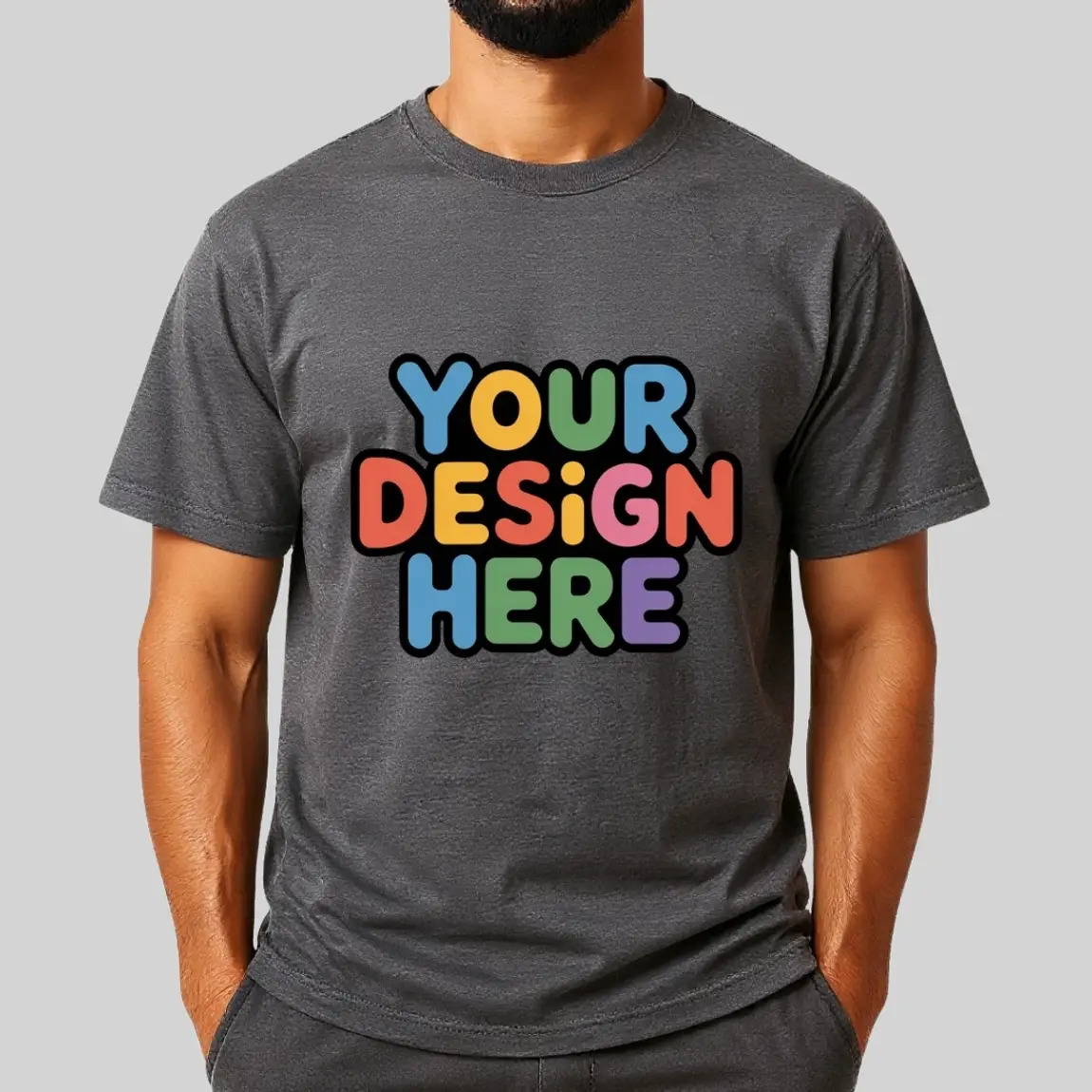
Hanes® - Authentic 100% Cotton T-Shirt
Understanding Your T-Shirt Printing Method Options
Each printing method used on your t-shirt design has distinct trade-offs in cost, durability, equipment requirements, and time investment. Here's what merch makers should consider:
| Method | Best Fabrics | Detail & Color Range | Scalability |
|---|---|---|---|
Heat Transfer | Cotton/Poly blends, Pre-shrunk cotton | ★★★★★ | ★★★★★ |
Embroidery | Cotton, Cotton/Poly blends | ★★★★☆ | ★★★★★ |
Screen Printing | Most fabrics | ★★★☆☆ | ★★★☆☆ |
Direct-to-Garment (DTG printing) | Cotton | ★★★★★ | ★★★☆☆ |
Inkjet Iron-on | Light cotton | ★★★☆☆ | ★☆☆☆☆ |
Why Heat Transfer and Embroidery Lead the Industry
For merch makers prioritizing quality and versatility, heat transfer and embroidery offer the best balance. Heat transfer works beautifully on both pre-shrunk cotton jerseys and cotton/poly blends, delivering vibrant prints with full-color, photographic detail. Heat transfer applies designs using pressure against a flat surface, ensuring even adhesion across the entire print area.
Embroidery provides unmatched durability with durable prints that withstand hundreds of wash cycles and a premium, textured feel that elevates any design, making it ideal for logos and professional branding.
Both methods scale effortlessly from single samples to thousands of units. This versatility accommodates any style, from classic crew necks to athletic performance wear.
Direct-to-garment (DTG) printing offers detail similar to heat transfer but with significant limitations. While direct-to-garment would work well on a 100% cotton t-shirt, it struggles with blends that heat transfer handles effortlessly. Direct-to-garment also requires expensive equipment maintenance and specialized pretreatment for dark t-shirt fabrics.
Sublimation printing works only on white or light-colored polyester garments, severely limiting design applications. Sublimation printing cannot be used on cotton, the most popular t-shirt fabric. Heat transfer delivers vibrant results on both cotton and polyester without the fabric color restrictions that sublimation printing imposes.
The DIY Limitation
While methods like iron-on transfer paper work for t-shirt prototyping, they hit a labor wall around 20 to 50 shirts due to inconsistent results and time investment. Achieving consistent results requires special equipment that most merch makers cannot justify purchasing to deliver a professional finish.
Professional services using heat transfer and embroidery eliminate these bottlenecks while ensuring consistent quality across every t-shirt.
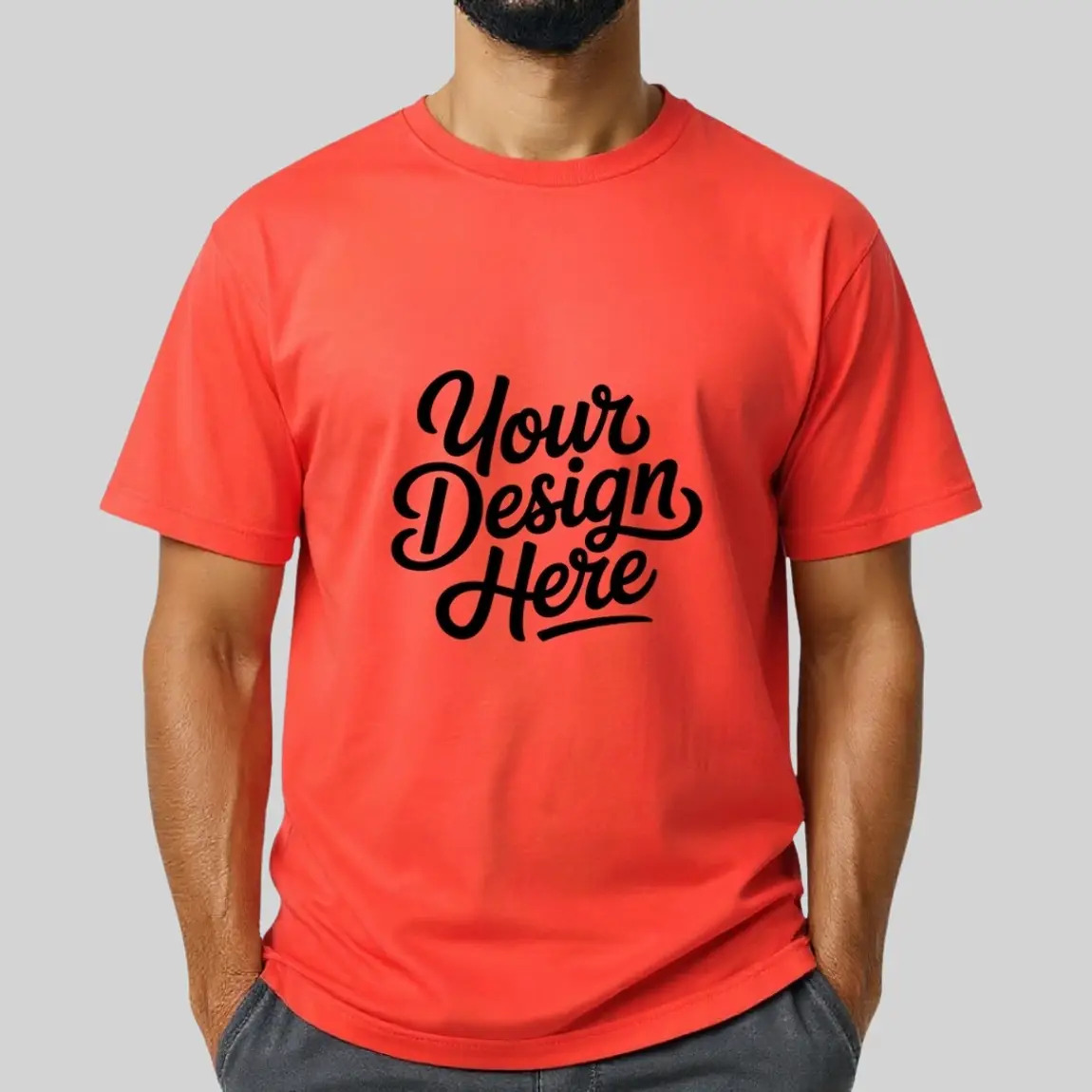
Port & Company® Fan Favorite™ T-Shirt
Comparing Methods: What Merch Makers Need to Know
Choosing the right printing method isn't just about cost per shirt. It's about balancing quality, turnaround time, design complexity, and how many units you need to produce. Whether you're launching a new merch line, fulfilling a corporate order, or testing designs before going to market, understanding these trade-offs helps you make smarter decisions for your business.
For Prototyping & Testing Designs
Iron-on transfer paper for inkjet printers is inexpensive and requires minimal equipment, making it suitable for initial concept testing. Testing your t-shirt design before committing to large production runs saves money and ensures quality. However, quality and durability are limited.
For Professional Merch Lines
Heat transfer and embroidery offer the quality and consistency customers would expect on a t-shirt. Heat transfer excels at vibrant, full-color designs on various t-shirt styles. Embroidery delivers a premium, textured finish perfect for logos and branding.
For Large Corporate Orders
Screen printing becomes cost-effective at 100+ units for simple designs, but setup is time-intensive. Heat transfer remains competitive even at higher volumes while offering more design flexibility. Corporate clients expect custom shirts that maintain consistent high-quality prints across large quantities.
The Scaling Challenge
DIY methods hit a practical limit quickly. Cutting and weeding vinyl for even 20 shirts can take hours. The ability to efficiently print t-shirts at scale requires professional equipment and expertise.
Quality control becomes nearly impossible across larger batches. This is where professional t-shirt printing services become not just convenient but essential for maintaining brand consistency.
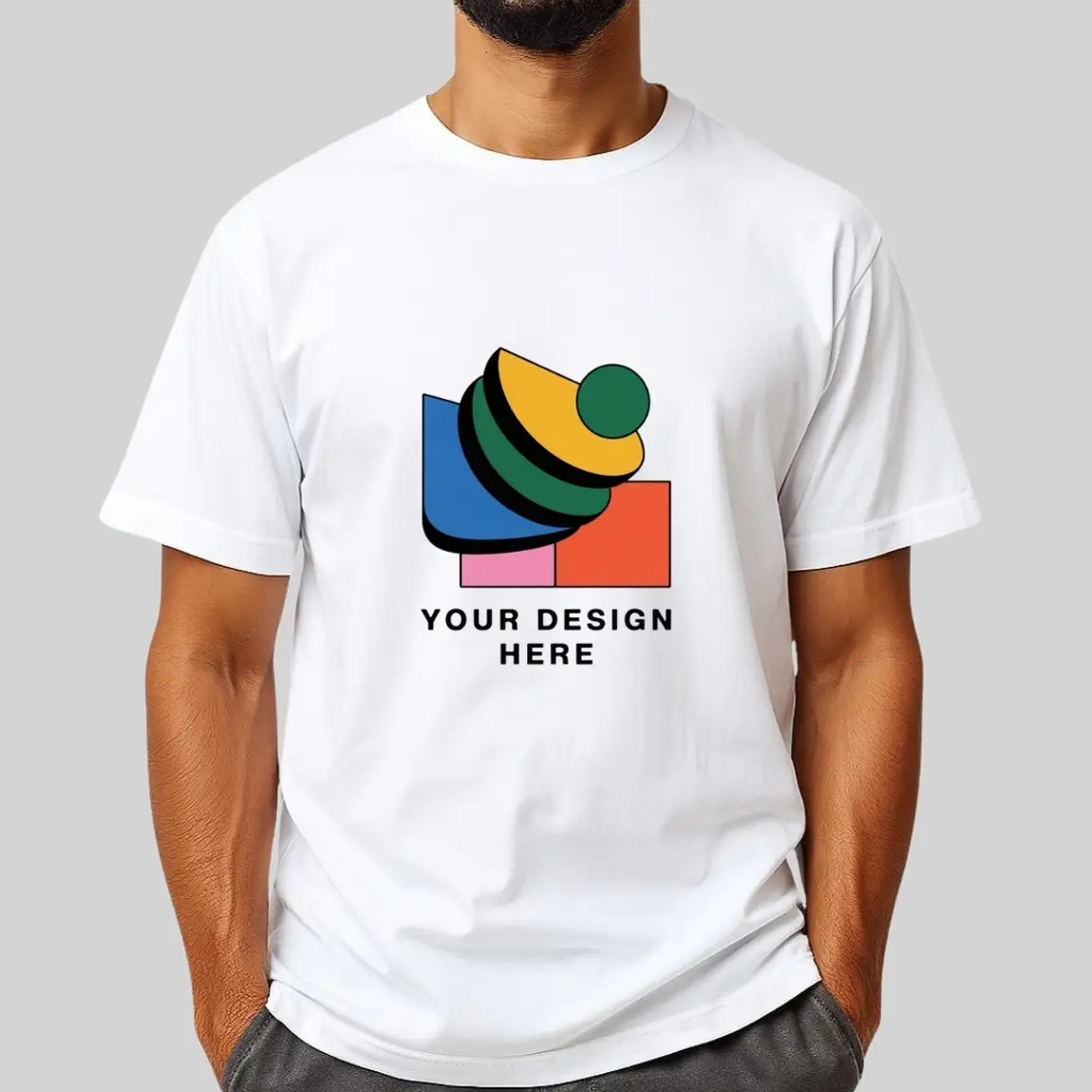
Gildan Adult Ultra Cotton T-Shirt - White
Why Professional T-Shirt Printing Makes Sense for Merch Makers
There's a clear tipping point where DIY methods stop making business sense. Time spent weeding vinyl, troubleshooting color matching, or managing equipment maintenance takes you away from what matters: designing great products and growing your brand.
SwagPrint.com specializes in producing custom shirts using heat transfer and embroidery on premium garments, including pre-shrunk cotton jerseys and cotton/poly blends. Whether you need 20 shirts for a pop-up shop or 2,000 for a corporate client, the quality remains consistent across every piece.
Trusted by Professional Merch Makers
Organizations across healthcare, finance, tech, and education rely on SwagPrint.com for their custom apparel needs. From non-profits and K-12 schools to large companies, clients choose us because quality and reliability matter.
What Sets SwagPrint.com Apart
Professional-grade heat transfer and embroidery technology deliver color accuracy and detail that home equipment can't match. We handle sourcing, printing, quality control, and fulfillment, so you can focus on your designs and customers instead of production logistics.
Ready to Scale Your Designs
Whether you're producing your first batch or expanding an existing merch line, SwagPrint.com makes professional printing accessible. Get consistent results, reliable turnaround times, and the support you need to bring your creative vision to life.
Making Smart Printing Decisions for Your Merch Business
Understanding your printing options is the first step to creating high-quality custom t-shirts that represent your brand. Whether you're testing initial concepts or ready to produce at scale, the right printing approach makes all the difference in quality, consistency, and customer satisfaction.
For merch makers serious about growth, partnering with a professional printing service eliminates the bottlenecks of DIY production. SwagPrint.com's heat transfer and embroidery solutions deliver the quality and reliability your customers expect, with the flexibility to scale as your business grows.
Ready to bring your designs to life with professional results? Connect with us to discuss your project and discover how easy professional custom apparel printing can be.